German Shepherd Cost Guide
On this page · 11 sections
- 01What People Forget to Budget For
- 02Purchase or Adoption
- 03One-Time Setup Costs
- 04First-Year Recurring Costs
- 05Veterinary Costs
- 06Pet Insurance Costs in the First Year
- 07Training Costs and Why They Matter
- 08The First-Year Total
- 09How to Actually Save Money in Year One
- 10First-Year Cost Questions Owners Ask Most
- 11Sources
Nobody tells you the purchase price is just the beginning. When I brought my first Shepherd home, the dog itself was the cheapest part of the first three months. Food, vet visits, gear, things you never thought about. It stacks up fast.
The honest range for year one, not counting the dog itself: $2,500 to $6,100. Where you land depends on whether you get insurance, how you handle training, and whether your puppy decides to swallow a sock at 4 a.m. For a wider view that includes annual and lifetime numbers, see our full German Shepherd cost guide. If you want the puppy capstone with month-by-month supplies, vaccinations, and food, see our puppy first-year cost breakdown.
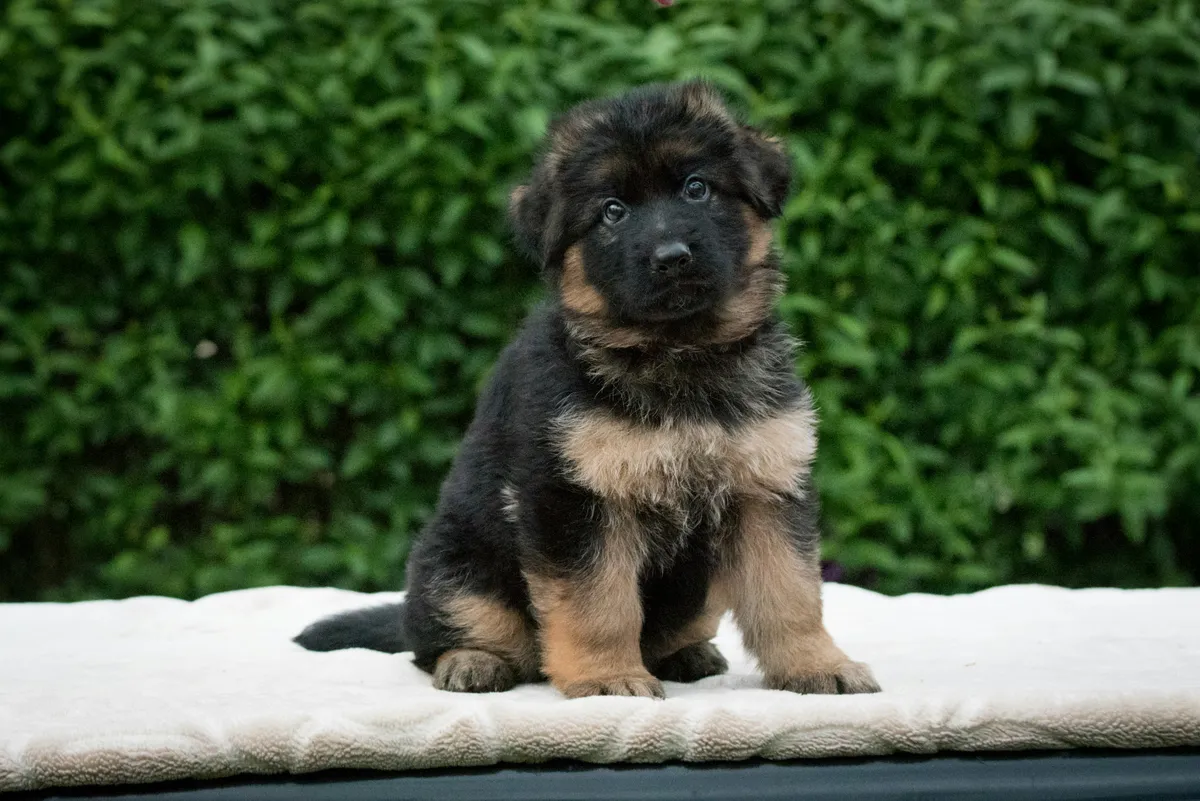
What People Forget to Budget For
Before the detailed breakdown, here are the costs that catch most new owners off guard:
- The puppy vaccination series. Three rounds of DHPP plus rabies, bordetella, and deworming. First-year vet bills run significantly higher than any year after.
- Emergency fund. Puppies chew things. Rocks, socks, remote controls. An after-hours emergency vet visit averages $800–$1,500. Set aside $500–$1,000 before your puppy comes home.
- Training. A 70-pound adolescent that hasn’t learned leash manners is not a problem you want to solve later.
- Flea, tick, and heartworm prevention. Year-round, non-negotiable. This alone runs $210–$420 annually.
A 2025 Synchrony study found that nearly 8 in 10 pet owners underestimated their first-year costs. For a large breed with higher food consumption and breed-specific health risks, that gap between expectations and reality tends to be even wider.
Purchase or Adoption
| Source | Cost |
|---|---|
| Reputable breeder | $1,500–$3,500 |
| Rescue/shelter adoption | $150–$500 |
| Show/working line breeder | $3,000–$10,000+ |
Everything below covers costs after you bring your dog home. Add your purchase or adoption fee on top. For more on what breeders charge and why, see our breeder price guide.
One-Time Setup Costs
You need most of this gear before the puppy arrives. The AKC new puppy checklist is a solid starting point, though the numbers below reflect what a large-breed puppy actually needs:
| Item | Low | High | Notes |
|---|---|---|---|
| Crate (42”) | $50 | $150 | Get one with a divider. It grows with the puppy |
| Bed | $40 | $120 | Skip memory foam until they stop chewing |
| Food/water bowls | $15 | $40 | Stainless steel, not elevated (bloat risk) |
| Collar + ID tag | $15 | $30 | |
| Leash (6ft) | $15 | $30 | Not retractable |
| Harness | $30 | $50 | Front-clip for pulling control |
| Grooming tools | $30 | $60 | Undercoat rake + slicker brush minimum |
| Baby gates | $25 | $75 | For restricting access during training |
| Puppy pads (temporary) | $10 | $20 | First 1–2 weeks only |
| Enzymatic cleaner | $10 | $15 | You will need this. Trust me |
| One-time total | $240 | $590 |
A few notes on where to spend and where to save. The crate matters. A sturdy 42-inch crate with a divider panel is the single best purchase you’ll make. The bed does not matter yet. Puppies destroy beds. Buy something cheap and upgrade around 18 months when the chewing phase is behind you.
First-Year Recurring Costs
Food is the biggest recurring line item by a wide margin. A Shepherd puppy eats more than you expect, and the transition from large-breed puppy formula to adult food happens around 12–15 months. The Merck Veterinary Manual’s feeding guidelines outline why puppy-specific nutrition matters for skeletal development in large breeds.
| Item | Annual | Monthly Equiv. | Notes |
|---|---|---|---|
| Food | $600–$1,200 | $50–$100 | Large breed puppy formula, then adult |
| Treats | $60–$120 | $5–$10 | Training treats + chews |
| Toys | $50–$100 | $4–$8 | Budget for replacements. They will destroy everything |
| Flea/tick prevention | $150–$300 | $13–$25 | Year-round in most climates |
| Heartworm prevention | $60–$120 | $5–$10 | Non-negotiable |
| Grooming | $0–$300 | $0–$25 | DIY is free beyond tools. Pro grooming 4–6x/year if preferred |
| Recurring total | $920–$2,140 | $77–$178 |
The food range is wide because it depends on whether you feed a mid-tier kibble like Purina Pro Plan ($50–$65/month) or a premium option like Orijen ($80–$100/month). Both can work well. For help choosing, see our best puppy food picks and the broader feeding guide. Our monthly food cost breakdown goes deeper on the ongoing numbers.
Veterinary Costs
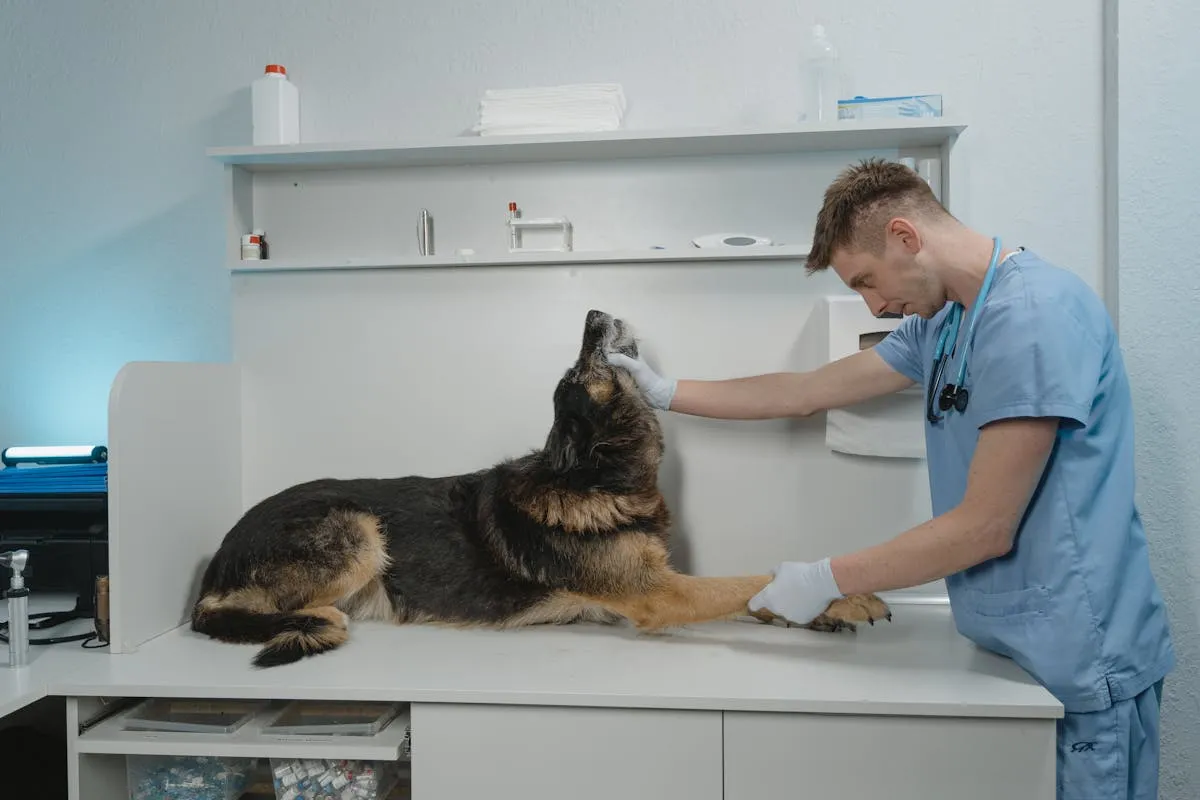
First-year vet bills are front-loaded because of the puppy vaccination series. Expect three to four visits in the first six months alone.
| Visit/Procedure | Cost |
|---|---|
| Initial exam | $50–$75 |
| DHPP vaccine series (3 rounds) | $60–$120 |
| Rabies vaccine | $15–$35 |
| Bordetella vaccine | $20–$40 |
| Fecal exam + deworming | $30–$60 |
| Spay/neuter (if done year 1) | $200–$500 |
| Microchip | $25–$50 |
| Vet total | $400–$880 |
On spay/neuter timing: Some veterinarians recommend waiting until 18–24 months for large breeds to support skeletal development. Discuss timing with your vet. If you wait, shift that $200–$500 to year two.
“Preventive care, including vaccinations and regular checkups, is one of the most cost-effective ways to maintain a pet’s health over its lifetime.”
Pet Insurance Costs in the First Year
“Nearly 8 out of 10 pet owners say their pet’s expenses were more than they anticipated.”
— Synchrony Lifetime of Care Study, 2025
Insurance is optional but worth serious consideration for this breed. German Shepherds are predisposed to several expensive conditions, and the treatment costs put the insurance math into perspective:
| Condition | Typical Treatment Cost |
|---|---|
| Total hip replacement (per hip) | $5,600–$10,000+ (MetLife / U. Missouri) |
| Bloat/GDV emergency surgery | $5,000–$7,000+ (higher with ICU/necrosis) |
| Exocrine pancreatic insufficiency (EPI, ongoing) | $500–$3,000+/yr (lifelong enzymes; scales with size) |
| Degenerative myelopathy (management) | $500–$3,000+ |
| ACL/cruciate ligament repair | $3,000–$6,000 |
A single hip surgery can wipe out five years of insurance premiums in one bill. For a deeper look at breed-specific health expenses, see our German Shepherd health problems and costs guide. Getting a policy while your dog is a puppy means the lowest rates and no pre-existing condition exclusions.
| Monthly | Annual | |
|---|---|---|
| Basic plan | $35–$50 | $420–$600 |
| Comprehensive plan | $60–$100 | $720–$1,200 |
The ASPCA’s pet ownership cost guide puts average annual pet insurance at $300–$600, but that figure reflects all breeds. Large breeds with known health risks typically fall at the higher end. Our pet insurance comparison for German Shepherds breaks down specific plans and what they cover.
Three questions. Stop at the first one that routes you to "Insure now".
- Q1 Can you cover a $5K–$10K vet bill in cash without major hardship?
- No Insure now.Premiums are far cheaper than the bill.
- Yes Continue to Q2.
- No
- Q2 Will you actually keep an emergency fund untouched?
- No Insure now.Self-insurance only works if the fund exists.
- Yes Continue to Q3.
- No
- Q3 Is your dog under 6 months old?
- No Self-insure with the fund.Pre-existing conditions limit new policy value at this stage.
- Yes Either path works.If you insure now, premiums are lowest and nothing is excluded.
- No
Training Costs and Why They Matter
This is the one line item where spending a little early saves a lot later. An untrained Shepherd at 70+ pounds is a problem that gets more expensive to fix every month you wait.
| Option | Cost |
|---|---|
| Online training program | $47–$97 (one-time) |
| Group puppy class (6–8 weeks) | $100–$200 |
| Private trainer (per session) | $75–$150 |
| Board-and-train (2–4 weeks) | $1,000–$3,000 |
The practical approach: start with a group puppy class for socialization ($100–$200) and supplement with an online training program ($47–$97). That combination covers most German Shepherds for under $300. Private sessions make sense for specific behavioral issues, not general obedience. Board-and-train is rarely necessary for this breed.
The First-Year Total
| Category | Low | High |
|---|---|---|
| One-time setup | $240 | $590 |
| Recurring (food, treats, prevention, grooming) | $920 | $2,140 |
| Veterinary | $400 | $880 |
| Insurance | $420 | $1,200 |
| Training | $50 | $300 |
| Emergency fund | $500 | $1,000 |
| First-year total | $2,530 | $6,110 |
Source: Excludes purchase/adoption fee. NAPHIA 2024, AAHA 2022, Rover 2025, Synchrony 2025.
Recurring costs dwarf every other category. Setup is small but front-loaded. Emergency fund is optional in the sense that you might not spend it. But you should have it.
Add your purchase or adoption fee on top. A breeder-purchased German Shepherd with insurance and mid-range food will typically land around $3,500–$5,000 for year one, not counting the dog itself. Over a 10- to 13-year lifespan, total ownership costs typically fall between $20,000 and $50,000 depending on health and lifestyle choices. Our lifetime cost estimate breaks that down further.
How to Actually Save Money in Year One
Not every tip you’ll read online is practical. These are the ones that make a real difference:
- Adopt instead of buying. Saves $1,000–$3,000 upfront, and rescue German Shepherds often come vaccinated and spayed/neutered already.
- Chewy auto-ship for food and prevention. The 5–10% recurring discount adds up across 12 months of large-breed food orders.
- DIY grooming. A $15 undercoat rake does the same job as a $50+ grooming appointment. This breed sheds constantly, so you’ll be brushing regardless.
- Start with a cheap bed. Your puppy will chew through the first one. Upgrade to memory foam after 18 months.
- Get insurance as a puppy. Premiums are 20–40% lower than adult rates, and nothing is excluded as pre-existing yet.
- Online training before private sessions. A $47 program covers 90% of what a new owner needs. Save the $150/hour trainer for problems that actually require one.
First-Year Cost Questions Owners Ask Most
Is $2,500 realistic for the first year?
Only if you adopt, choose mid-range food, skip insurance, and avoid any health surprises. For a breeder-purchased puppy with insurance, budget $3,500–$4,500 as a more realistic floor. The cost calculator will tell you where your own choices land.
What’s the biggest surprise expense?
Emergency vet visits. A swallowed object, a broken tooth, sudden GI distress from eating something off the ground. The average emergency visit runs $800–$1,500, and after-hours clinics charge even more. This is exactly why the emergency fund matters more than most people think when they’re budgeting.
Can I skip pet insurance?
You can. But consider that total hip replacement runs $5,600–$10,000+ per hip (MetLife and University of Missouri pricing), and bloat surgery typically lands at $5,000–$7,000+. A single major procedure can cost more than several years of premiums. Many Shepherd owners find that insurance provides peace of mind given the breed’s health profile, though a dedicated emergency fund of $5,000–$10,000 is a valid alternative if you’ll actually keep it funded.
How do first-year costs compare to ongoing years?
Year one is the most expensive because of one-time setup costs and the puppy vaccination series. After that, annual costs typically settle into the $1,500–$3,000 range depending on your food choice, whether you keep insurance, and whether any health issues develop. The big variable is health. A healthy Shepherd costs relatively little to maintain year over year. One that needs surgery or long-term medication changes the math entirely. For a full breakdown, see our annual cost guide.
Sources
First-year cost figures, breed-health statistics, and the vaccine schedule on this page are sourced as follows. Last verified 2026-05-20.
- NAPHIA. State of the Industry Report 2024, Section 3 (Average Premiums). naphia.org. US dog A&I average $749.29/yr (~$62/mo); accident-only $193.29/yr.
- Oberbauer AM, Keller GG, Famula TR. Long-term genetic selection reduced prevalence of hip and elbow dysplasia in 60 dog breeds. PLOS ONE 2017;12(2):e0172918. PMC5325577. GSD hip 18.9% / elbow 17.8% across ~107K OFA evaluations.
- MetLife Pet Insurance. Dog Hip Dysplasia Surgery Cost. metlifepetinsurance.com. THR pricing $5,600–$6,000/hip (insurer-reported).
- University of Missouri Veterinary Health Center. Canine Total Hip Replacement. vhc.missouri.edu. Teaching-hospital THR pricing $8,500–$10,000+/hip.
- Great Pet Care. Dog Bloat Surgery Cost. greatpetcare.com. GDV market estimate $5,000–$7,000+ (higher with ICU/necrosis).
- Progressive. Does Pet Insurance Cover Hip Dysplasia? progressive.com. Bilateral and pre-existing exclusion rules.
- Synchrony 2025 Pet Lifetime of Care Study (n=4,861, fielded Jan-Feb 2025). PR Newswire release. 8-in-10 underestimate; $22,125–$60,602 15-yr dog lifetime estimate.
- Rover. 2025 Cost of Pet Parenthood Report. rover.com. US dog avg $3,343/yr (~$279/mo).
- AAHA. Canine Vaccination Guidelines 2022. aaha.org. DHPP series schedule + core/non-core protocols.
- AKC. New Puppy Checklist. akc.org. Setup-gear baseline.
- Merck Veterinary Manual. Feeding Practices in Small Animals. merckvetmanual.com. Large-breed puppy nutrition.
- American Veterinary Medical Association. Preventive Pet Healthcare. avma.org. Preventive-care position.
- ASPCA. Cost of Owning a Dog. aspcapetinsurance.com. Baseline pet-ownership cost guide.
Data sidecar: agent-os/data-sources/german-shepherd-first-year-cost.md (internal reference; every figure on this page maps to a row there).
Owner-data box reflects Sam’s records across four Shepherds (per agent-os/22-sams-dogs-reference.md).
Disclaimer: Cost estimates are approximations based on publicly available data. Actual costs vary significantly by location, provider, and individual circumstances. Read full disclaimer →
Follow new work
A new guide every week or so.
Roughly one new guide every week or so. Cost data, feeding research, breed health — sourced and dated. By Sam, in Belgium.
Related Articles

Best Pet Insurance for German Shepherds
A practical comparison of pet insurance options for German Shepherd owners. What to look for, what to watch out for, and how to choose a plan that fits.
Annual Cost of Owning a German Shepherd
Itemized annual cost breakdown for German Shepherd ownership. Food, vet care, insurance, grooming, and extras with real 2026 numbers and sourced estimates.
German Shepherd Puppy: What Everything Costs
Month-by-month first-year cost breakdown for a German Shepherd puppy. Sourced numbers for purchase, supplies, vet, food, training, insurance, and surprises.
How Much Does German Shepherd Training Cost
German Shepherd training costs in 2026: group classes $100–$300, private $60–$150/hr, board-and-train $1K–$5K, behaviorist $250+. First-year budget.